
Gas Furnace Safety in North Carolina: CO & Heat Exchanger Warning Signs
Know what’s normal, what’s not, and how to protect your home before peak heating season.
Durham NCRaleigh NCApex NCChapel Hill NCMorrisville NCHillsborough NCCarrboro NCSouthport NCLillington NCFayetteville NC
•
Early Warning Signs You Shouldn’t Ignore
- Yellow or dancing flames (should be steady blue).
- Soot streaks near burners or the vent connector.
- Metallic/burning odor or persistent “exhaust” smell when heat starts.
- Rust/corrosion on the heat exchanger, burners, or flue.
- Frequent rollout switch trips or limit switch faults.
- CO detector alarms (treat as an emergency).
What To Do If You Suspect CO or a Cracked Exchanger
- Get everyone outside and call 911.
- Do not re-enter until cleared by first responders.
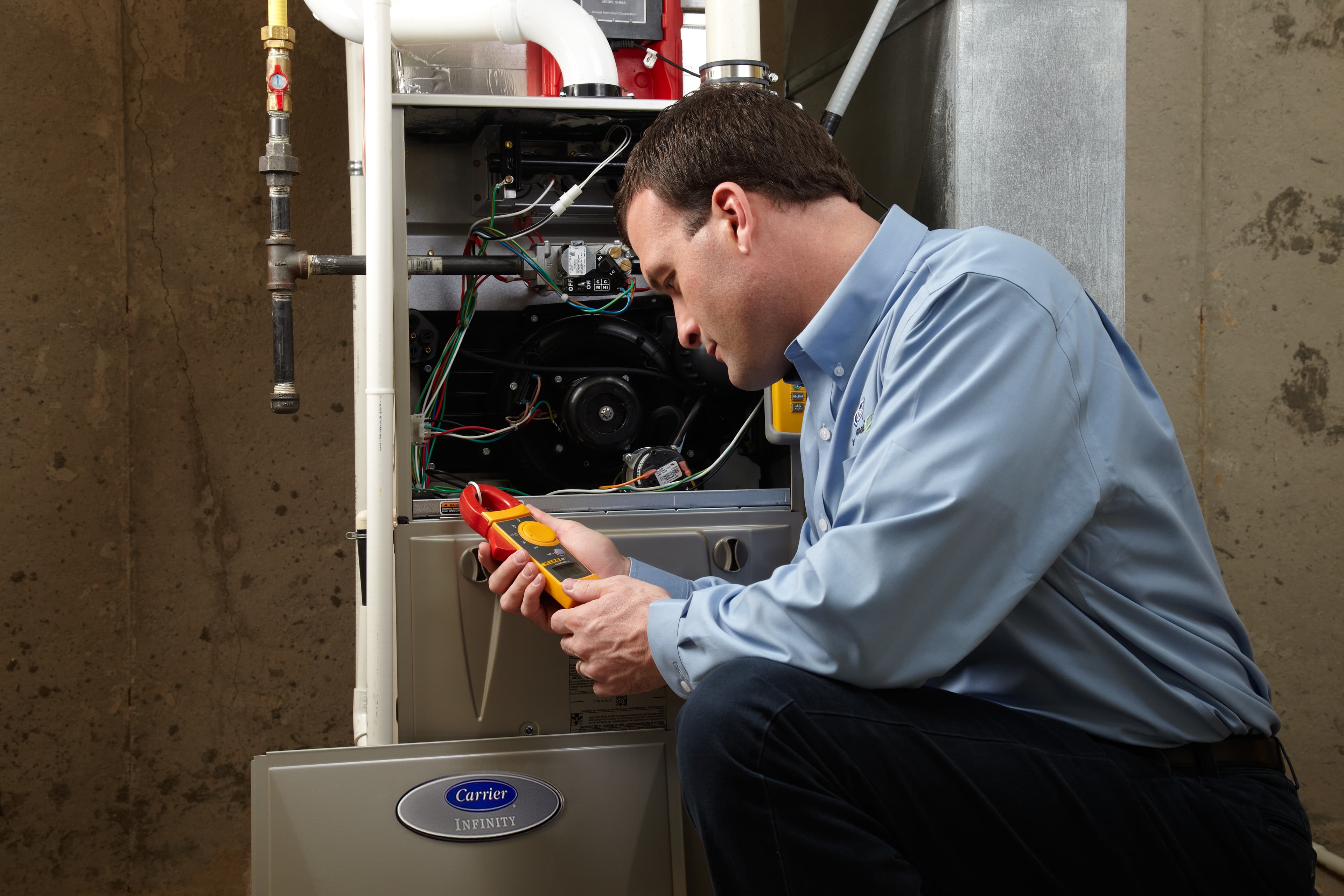
- Call us for diagnostics. We’ll perform combustion analysis, draft testing, and camera inspection (when applicable).
- If the exchanger is cracked, plan for replacement—patching isn’t approved by OEMs.
CO Detectors: Placement & Testing
Place CO detectors near sleeping areas and on each level of your home. Avoid installing directly next to fuel-burning appliances to prevent nuisance alarms. Test monthly and replace per the manufacturer schedule (often 5–7 years).
What Our Safety Inspection Covers
- Combustion analysis and draft testing
- Heat exchanger surface and camera inspection
- Burner, igniter, flame sensor cleaning & testing
- Limit/rollout switch checks and wiring integrity
- Vent and combustion air verification
- Filter/airflow check for proper temperature rise
Schedule a furnace safety inspection
Combustion analysis, heat exchanger check, and venting verification—done right.