
Thermostat Placement & Programming Mistakes That Waste Energy in North Carolina
The most efficient equipment can underperform if your thermostat is in the wrong spot—or running the wrong schedule. Fix these common issues to stabilize comfort in Durham, Raleigh, Apex, and Chapel Hill.
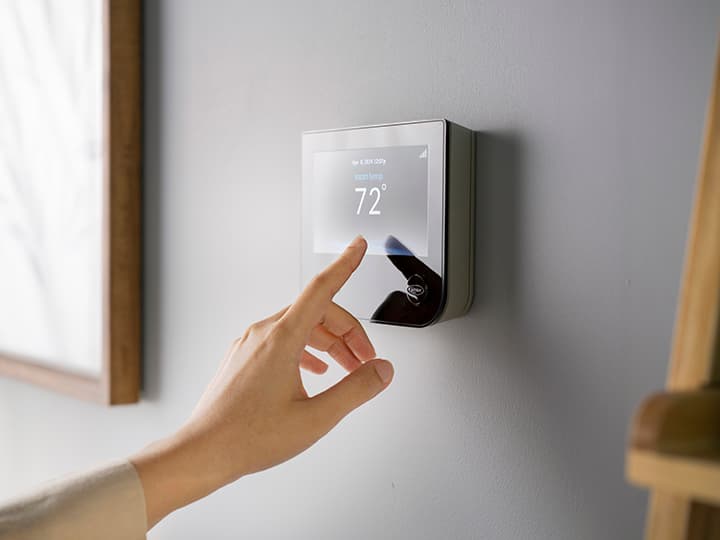
Best Location Rules
- Interior wall, central level: Avoid exterior walls and stairwells.
- Out of direct sun & drafts: Don’t place near windows, supply registers, or returns.
- 4–5 feet high: Typical breathing zone, away from lamps and TVs that radiate heat.
- For multi-story homes: Consider zoning or remote room sensors.
Programming That Actually Works
For cooling, aim for 76–78°F when home and a few degrees higher while away. For heating, 68–70°F when home and a bit lower overnight/away. Let smart stats pre-cool/heat before you return.
- Use geofencing or occupancy to avoid rigid schedules.
- Limit manual overrides—consistent schedules save energy.
- Pair with circulating fan on low to even out temps across rooms.
When You Need More Than Settings
If one side of the house is always hotter/colder, the root cause could be duct balance, missing returns, or single-stage equipment short-cycling. A zoning retrofit or variable-speed upgrade may be the real fix.
Triangle Tip
Our humid summers mean comfort depends on both temperature and humidity. If you’re setting lower than 72°F just to feel dry, ask us about dehumidificationor variable-speed systems instead.